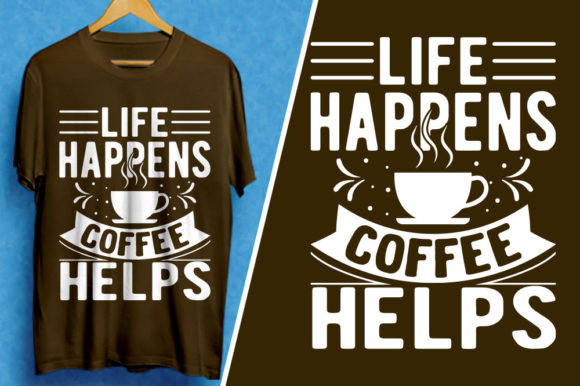
Reviewing Life Happens Coffee Helps for Embroidery
As a designer who spends half my life digitizing and the other half stitching, I have learned that not every cute graphic translates well to thread. We have all been there: you see a trendy typography design online, imagine it perfectly centered on a cozy sweatshirt, and then reality hits when the bobbin thread breaks three times in the letter "O." That is why I took a close, critical look at Life Happens Coffee Helps Coffee T-Shirt before committing it to any client project or personal inventory. This isn't just about whether it looks good on a screen; it is about how it behaves under the needle.
First Impressions: Mood and Visual Personality
The first thing that strikes me about Life Happens Coffee Helps Coffee T-Shirt is its relatable, laid-back energy. It taps into that universal morning sentiment that resonates with almost everyone. Visually, the typography feels bold and approachable. For an embroidery project, this is a strong starting point. Designs that rely heavily on intricate, thin serifs often fail in stitching because the thread cannot hold such fine detail without looking messy. However, the blocky, confident nature of this coffee-themed graphic suggests it was built with visibility in mind.
The layout appears balanced, which is crucial for hoop stability. When I evaluate a new machine embroidery design, I look for visual weight distribution. If one side is too dense and the other too light, the fabric can pucker or shift during stitching. This design seems to offer a symmetrical or well-centered composition, making it a safe bet for standard hoop sizes. It creates a mood of comfort and humor, which is exactly what customers look for in a personalized gift or a casual custom apparel piece.
Real-World Application: From Screen to Stitch
Let’s talk about where this design actually shines. I recently considered using a similar concept for a local café’s staff uniforms. They wanted something that felt authentic but durable enough for daily washing. Life Happens Coffee Helps Coffee T-Shirt fits this brief perfectly. Imagine this stitched onto a high-quality cotton tote bag. The bold lines would stand out against the canvas texture, creating a sturdy tote bag design that doesn't get lost in the weave.
For Etsy sellers and craft business owners, versatility is key. This graphic works exceptionally well on sweatshirt embroidery. The thicker fabric of a fleece or crewneck provides a stable base for the stitches, allowing the thread colors to pop. I can also see this working as an embroidered patch. If you stitch it out on twill or felt and then cut it out, you have a versatile asset that can be ironed onto jackets, hats, or backpacks. This expands your product line without requiring new digitizing work.
However, context matters. While the description mentions it is a T-Shirt Designs asset, we must consider the fabric. On a thin, stretchy jersey knit, a large solid fill area can cause significant pulling. If you plan to use this on a standard tee, I strongly recommend using a cut-away stabilizer rather than a tear-away. This ensures the finished product maintains its shape after multiple washes. For heavier fabrics like denim aprons or canvas pillows, the design will sit beautifully on the surface without distorting the material.
Technical Considerations for the Embroiderer
Before you load this into your machine, there are practical steps you must take. The product description lists several file formats: PNG, EPS, AI, SVG, PDF, and JPG. As an embroidery professional, I need to clarify a critical point here. These are primarily graphics and vector files, not necessarily native embroidery machine files like DST, PES, or JEF.
This means you will likely need to digitize this design yourself or hire a digitizer to convert the SVG or AI paths into stitch data. This is actually a benefit for experienced designers. It allows you to control the stitch density, choose between satin stitch borders and fill stitch interiors, and determine the underlay structure. If you are not a digitizer, ensure you have the software skills to convert these vectors, or confirm if the seller provides actual embroidery files separately. Assuming you are working from the vector assets provided:
- Check Stitch Density: Coffee cups and text can become dense quickly. Reduce the density slightly if stitching on stretchy fabrics to prevent puckering.
- Thread Color Contrast: Test your thread choices. A dark brown thread on a black shirt will vanish. Use contrasting colors to ensure the message "Life Happens Coffee Helps" is readable from a distance.
- Hoop Size: Measure the design dimensions against your hoop. If the design is large, you may need a 5x7 or 6x10 hoop. Never try to squeeze a large design into a 4x4 hoop by resizing it too small, as this will distort the proportions and make the text illegible.
- Stabilizer Selection: Always use the right stabilizer. For knits, use cut-away. For wovens, tear-away is usually sufficient. For caps, use a stiff backing to support the curved surface.
Navigating Potential Pitfalls
While Life Happens Coffee Helps Coffee T-Shirt is a strong candidate for many projects, it is not without its challenges. Tiny details are the enemy of embroidery. If the original graphic has very thin lines connecting letters or small decorative elements around the coffee cup, these may not stitch out cleanly. Thread has thickness; it cannot replicate a one-pixel line.
If you are digitizing this from the provided SVG or AI files, simplify the paths. Remove any unnecessary anchor points. Ensure that any closed shapes are truly closed to prevent your machine from jumping or creating loose threads. Also, be cautious with dark fabric. If you are stitching on a navy or black garment, you will need to use a bright underlay or a topping sheet to prevent the background fabric from peeking through the stitches. This is especially important for the lighter areas of the design, such as steam rising from the coffee cup or highlights in the text.
Another consideration is the fabric texture. On terry cloth towels or fluffy blankets, the stitches can sink into the pile. In these cases, use a water-soluble topping. This keeps the stitches on the surface, ensuring crisp edges and professional-looking results. Without it, your holiday embroidery gift might look fuzzy and undefined.
Commercial Value and Brand Consistency
For small shop product creators, consistency builds trust. Using a clear, well-balanced design like this helps maintain a professional aesthetic. Whether you are creating baby embroidery items for a nursery or commercial embroidery for corporate gifts, the clarity of the message matters. "Life Happens Coffee Helps" is a phrase that sells because it is humorous and true. It encourages impulse buys.
When listing this on your store, use high-quality printable mockup images or photos of actual stitched samples. Show the design on different products: a mug rug, a tote, a hoodie. This helps customers visualize the handmade product in their own lives. Remember, the value lies not just in the digital file, but in the quality of the physical item you produce. A well-stitched design on a premium blank garment commands a higher price than a poorly stitched one on a cheap tee.
Final Verdict for Designers
In conclusion, Life Happens Coffee Helps Coffee T-Shirt is a viable and appealing choice for embroidery projects, provided you handle the technical conversion correctly. It offers a blend of humor and style that appeals to a broad audience. By paying attention to stabilizer choice, thread contrast, and fabric suitability, you can transform these design assets into high-quality, sellable goods. Always test on scrap fabric first. Never skip the test stitch. Your reputation as a maker depends on the quality of every loop and knot. With careful execution, this design can become a staple in your craft business lineup, bringing joy and caffeine-fueled comfort to your customers.